Napping is healthy.
Why doesn’t everyone nap? Maybe it’s for a lack of time. But really, napping makes us more productive. So doesn’t it make sense that it actually saves time?
Napping is healthy because it tailors our activity in accordance with our energy level, which tends to fluctuate throughout the day. This natural ebb and flow of energy defines what is called our circadian rhythm. And napping helps synchronize us with it.
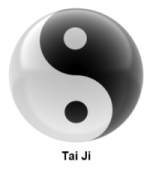
In general, life flows at a certain rhythm. The Chinese understood this universal rhythm, and they memorialized it through the yin-yang symbol. The symbol is called Tai Ji.
Here are some examples of yin-yang cycles:
- day / night
- birth / growth / decay / death
- spring / summer / fall / winter
- crabbiness / pain / cuddliness, or the menstrual cycle
Our circadian rhythm is yet another cycle of yin-yang movements. And it is partly exemplified by the daily fluctuation of our hormones.
The Relationship between Yin/Yang, Circadian Rhythm and Napping
The Tai Ji symbolizes constant movement and change in which yang can represent action, and yin can represent rest. We function best when our yin and yang energies stay balanced as their influence varies throughout the day.
To help maintain energetic balance, we use biochemicals called hormones. Cortisol is a hormone that regulates energy production. It’s known as a stress hormone. That’s because its level rises in response to a greater demand for energy in times of stress. But even in times of peace, cortisol helps maintain blood glucose levels for a steady supply of energy.
In health, our cortisol level – and thus, the amount of glucose available – naturally declines in the late afternoon. That marks a good time for a short rest, after the hustle-and-bustle of a busy day. It helps rejuvenate our mind and body so we can sustain our energy into the evening.
An interesting parallel between Eastern and Western medicine is that the Chinese recognized the late afternoon (3 to 5 pm) as the time when our lung energy is weakest. In Chinese medicine, our lung system is partly responsible for energy production. For in addition to food and water, the air we breathe provides us with energy.
In terms of Chinese medicine, afternoon naps help secure our lung system when it’s least capable of producing energy. When we habitually ask our bodies to push forward instead of napping when our energy is naturally lower, we create a condition of chronic stress. And stress leads not only to disease but to poor efficiency as well.
The Doable Act
The good thing is that it only takes 10-20 minutes of napping to help reduce stress and prevent fatigue. And naps can reasonably be scheduled in the late afternoon.
So the next time you see a yin-yang symbol tattooed on some teenager’s ankle, take it as a reminder to nap each day.