Tanqueray image via flickr.com/vox_efx
You’re at a party, and you’re shy. Everyone is dancing or generally animated. You feel awkward because you are not yet uninhibited enough to socialize.
So you partake in an informal research study. You are both subject and observer, testing the effectiveness of gin and tonics for achieving sociability. Your study lacks randomization, control [it’s a party after all], and placebos – not the gold standard of scientific inquiry, but empirical nonetheless.
You count your gin and tonics, measure time, and observe effects.
You tabulate…
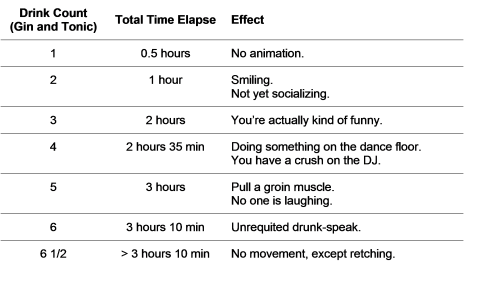
The morning after, you draw conclusions…
1 gin and tonic >> sustain awkwardness
2-3 gin and tonics >> dog gone it, people like you
4 gin and tonics >> risk embarrassment
> 4 gin and tonics >> overdose, and defy the rules of social etiquette
The ultimate conclusion: dosage matters.
In the study above, the therapeutic dose is 2 – 4 gin and tonics at a rate of 1.6 drinks/hour. This is the range you want to stick to in order to keep all your friends.
The principles of dosage applied to gin also apply to herbs. But the difference between alcohol and herbs is that if you take too many herbs, your friendships will not be compromised. So, grab a gin and tonic (just one) and let’s talk herbs…
From Gin, to Ginseng (and other herbs)
Chinese medicine treats people, not diseases. So, the uniqueness of each individual will dictate not only the therapeutic range of herb doses but also the herbs selected.
Two reasons why people may hesitate with herbs:
1 The feeling that herbs lack effectiveness
2 Concerns of overdose or herb-drug interactions
Re: The feeling that herbs lack effectiveness
If you’re not getting results from an herbal formula, you may not have reached your therapeutic dose yet. A health practitioner can help you in finding your therapeutic range. This applies not only to individual dosage, but also to the total daily dose.
For example, a prescribed dosage may be 3g taken 3x/day = 9g daily, taken on an empty stomach to facilitate absorption. Or maybe, 10 pills 3x/day = 30 pills daily (they’re tiny pills).
Often, patients find it challenging to achieve the prescribed dosage. In which case, a lack of results may be more an issue of compliance rather than herbal effectiveness.
Another possibility is that the formula may be wrong. So rather than a deficiency in the herbs, this would indicate an inaccurate herb choice. This is where an experienced practitioner can review and possibly modify your formula.
Other factors that affect herbal effectiveness (highlighting the importance of a reputable source for herbs):
Identification – whether the herbs you have are the herbs you think you have. There are cheap substitutes for potent herbs out there.
Quality – whether the herbs are free of pesticides, heavy metals and micro-organisms; and are harvested at their appropriate time of maturity. Just like humans, with greater maturity comes wisdom. Yes, herbs are wise. In other words, they need time to develop the complexity of their healing properties.
Processing – The word processing, in Chinese medicine, has a different use than in the American food chain. Processing affects the therapeutic properties of an herb. A good example is rhubarb (da huang): Raw, it’s a laxative. Wine-fried, it invigorates blood. Charred, it stops bleeding.
Preparation – If you have a raw formula and plan on cooking it at home, the way you cook matters. But often these days, formulas are prepared for you prior to picking them up.
Herbs are effective with the proper dose, quality assurance, and appropriate processing… and an accurate diagnosis.
Re: Concerns of overdose or herb-drug interactions
Overdosing
Overdosing and herb-drug interactions are valid concerns. Most people think of overdosing in terms of pharmaceuticals or illicit drugs, which are toxic. In fact, it’s their toxicity that prompts such a rapid response from the body. The problem is that the response is uncontrolled, for the strength of the drugs brings some positive changes along with side effects.
Drugs also mostly treat symptoms. And often, side effects are seen as further symptoms leading to the addition of more toxic drugs.
Herbs are generally non-toxic. They are medicine that nature provides. They are fully intact like whole food, so that all of their chemicals work together to gently restore health. In contrast, drugs are isolated chemicals and lack the complexity of natural design.
Using whole herbs rather than isolated “active ingredients” means that all of the herbal chemicals can work synergistically to moderate toxicity, facilitate absorption, and accentuate the healing properties. Isolated chemicals – like drugs – offer unbalanced toxicity.
There are a few herbs that are toxic, which brings us back to the issue of processing mentioned above. Processing herbs helps reduce toxicity, rendering them safe for consumption. A good example is pinellia (ban xia), which is extremely toxic but made safe by deep-frying it with ginger, vinegar or alum.
To further reduce the risk of toxicity, herbs are often combined to achieve greater synergy. A good example is the use of licorice (gan cao) in many formulas, which helps protect the stomach.
There are also a few cathartic herbs, or harsh expellants. The harshness of these herbs are acknowledged and therefore used judiciously. At least in the U.S., where litigation and liability run high, most practitioners won’t even risk using cathartics.
If there are adverse reactions to an herb(s), they are typically mild. And because of the gentleness of herbs, adjusting dosage, modifying the formula, or stopping use will quickly allay any side effects.
Herb-drug interactions
The worry of herb-drug interactions is prevalent enough such that the study of interactions is slowly becoming a specialty in the field of medicine. However, keep in mind that most of the stated herb-drug interactions are theoretical. In reality, reports of herb-drug interactions in the FDA’s Adverse Event Reporting System (AERS) are sparse.
Update, 11/17/11:
However, herb-drug interactions may be a concern if you are self-prescribing. For there is minimal risk of interactions only if a qualified health practitioner has prescribed herbs based on a proper diagnosis. For example, if you are on a blood thinner like Coumadin (warfarin), it would not make sense to take herbs that invigorate blood. A good practitioner would refrain from prescribing such herbs, essentially precluding an herb-drug interaction.
[end update]
Bottom Line
Herbs have been used for over 3,000 years (+/- 1 year) with detailed documentation on clinical effectiveness without serious side effects.
[A convenient segue]
I can’t talk about Chinese medicine without mentioning acupuncture, because acupuncture is so fun to practice.
Dosage applies to acupuncture as well. However, the word dosage is replaced with terms like frequency, duration, and strength of stimulation. And the same tenet applies – acupuncture treats people, not diseases.
p.s. I just bought the url, www.ginsengandtonic.com. I’m impulsive like that.